NHL Bet Builder Strategy: Hockey Same Game Parlays
 Available in US
Hockey same game parlays occupy a smaller niche than their counterparts in football or basketball, but the NHL offers distinctive opportunities for bettors who understand the sport’s unique dynamics. The fast-paced, physical nature of hockey creates high variance in individual games while maintaining predictable patterns across larger samples. Goals are precious in hockey, with most games producing only five or six combined between both teams, meaning every selection in your bet builder carries significant weight.
The relative youth of hockey SGP markets compared to other sports may actually benefit sharp bettors. Pricing algorithms have less historical data to train on, correlation models are less refined, and public betting patterns are less established. These factors can create inefficiencies that more mature markets have eliminated. For bettors willing to develop hockey-specific knowledge, NHL bet builders offer potential edge that football SGPs may no longer provide.
Understanding Hockey’s Low-Scoring Nature
Hockey’s fundamental characteristic is scarcity of goals compared to other major sports. Where NBA games routinely exceed 200 combined points and NFL games feature multiple touchdowns per team, NHL games often end 3-2 or 2-1. This goal scarcity creates cascading effects throughout every prop market you might include in a bet builder.
Low scoring means every goal matters more. A player’s anytime goal scorer prop succeeds perhaps 15-25 percent of the time even for elite scorers, not because the player underperforms but because goals are simply rare events. When building hockey SGPs, understand that goal-based props carry enormous variance. Even Connor McDavid fails to score most nights. Stacking multiple anytime scorer props creates a near-lottery-ticket situation where unlikely events must compound.
The flip side of goal scarcity is that related markets like saves and shots carry higher totals with more predictability. If teams average roughly 30 shots per game, goalie saves props typically sit in the 25-30 range. These volume-based stats follow more normal distributions than goal scoring, making them potentially better foundations for SGP construction than goal-based selections.
Game totals in hockey cluster tightly around 5.5 to 6.5 goals, with most games falling in a narrow band. Unlike football where game totals might range from 35 to 55 depending on matchup, hockey games rarely produce blowouts or extreme defensive struggles. This compressed distribution affects how you should think about correlation with other markets.
Goaltender Analysis
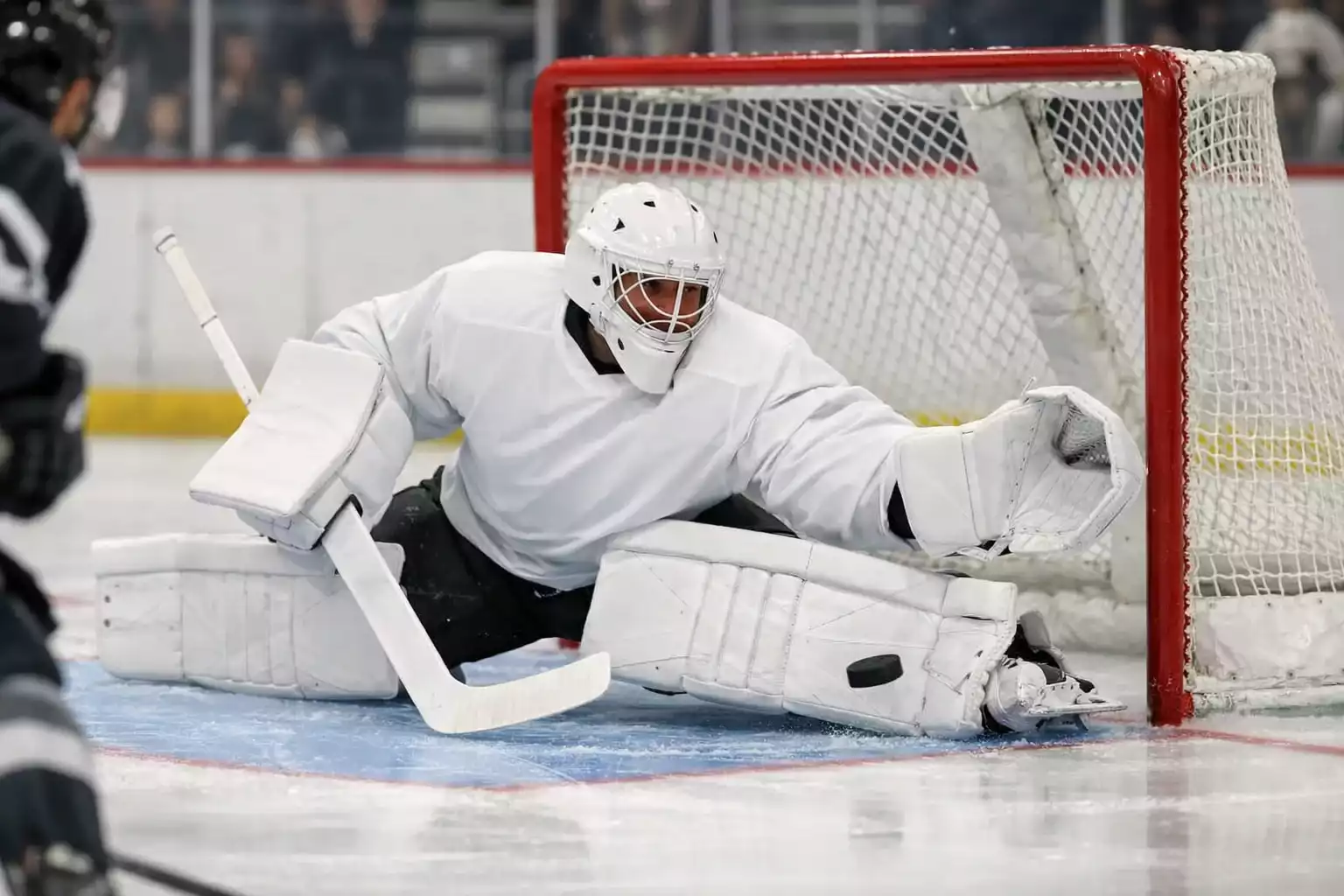
Goaltenders exert enormous influence over hockey outcomes, more than any comparable position in other sports except perhaps starting pitchers in baseball. A hot goaltender can steal games his team has no business winning, while a cold one can undermine even dominant skaters. Any serious NHL bet builder strategy must begin with goaltender assessment.
Saves props form the most popular goaltender market. A goalie’s saves total depends on two factors: his team’s defensive quality and the opposing team’s shot volume. A goaltender behind a porous defense faces more shots, creating opportunities for higher save totals. Conversely, a goalie behind an elite defensive system may face only 20 shots in some games. When selecting saves overs or unders, analyze both the goalie’s team and their opponent’s tendencies.
Goaltender wins can anchor SGP constructions because they correlate naturally with other desirable outcomes. When a goalie wins, his team scored enough goals to overcome the opposition, suggesting offensive success that could manifest in various skater props. Building around a favored team’s goaltender win while adding props for that team’s skaters creates positive correlation.
Shutout props offer high odds because shutouts are rare, occurring in roughly eight percent of NHL games. Including shutout props substantially reduces your SGP probability while boosting potential payout. These work best when elite goaltenders face weak offensive teams, but even then, one unlucky bounce can end the shutout. Use shutout props sparingly and understand their variance implications.
Backup goaltender situations create betting opportunities. When a team’s starter rests and the backup plays, both teams’ expected goal outputs may shift. Backups typically allow more goals than starters, potentially inflating team totals and creating save opportunities. Checking starting goaltender information before building your SGP catches these situations.
Skater Props and Line Combinations
Points, goals, assists, shots on goal, and blocked shots constitute the main skater prop categories. Each correlates differently with game outcomes and with each other, and understanding these relationships improves SGP construction.
Points props combine goals and assists, smoothing some variance compared to goals alone. A player can hit their points over through various combinations: two assists, a goal and an assist, or two goals. This flexibility makes points props somewhat more reliable than pure goal scoring props. When selecting point totals, consider both the player’s scoring ability and their linemates, since assists require someone else finishing plays.
Shots on goal props represent volume rather than success. High-usage players on offensive teams generate shots regardless of whether those shots find the net. Shot totals correlate with ice time and power play opportunities, making them more predictable than goal scoring. Stacking shots props for multiple forwards on an offensive team creates positive correlation: if one player generates shots, the team is probably generating offense broadly, helping teammates’ totals as well.
Line combinations matter enormously in hockey. Players who skate together share ice time and create opportunities for each other. A center who wins faceoffs cleanly sets up his wingers. A playmaking winger who drives possession creates shots for his linemates. Understanding which players complement each other helps you stack props intelligently rather than randomly.
Power play units concentrate offensive opportunity among specific players. When a team’s top power play unit includes their best scorers, those players accumulate disproportionate point totals despite potentially playing fewer total minutes. Checking expected power play time and unit composition before selecting scorer props adds analytical depth to your construction.
Correlations and Game Script
Hockey correlations differ from other sports due to the low-scoring nature and the importance of goaltending. Understanding what correlates positively, negatively, or not at all helps build coherent SGPs rather than contradictory ones.
Team winning correlates with their skaters scoring but less directly than you might expect. A team can win 2-1 with contributions from just two goal scorers while their superstar is held pointless. The connection between individual skater success and team winning is real but noisy. Do not assume that backing a team necessarily means their top scorers will exceed expectations.
Game totals correlate with goaltender weakness on both sides. When both goaltenders struggle, goals flow in both directions, pushing totals over. When both goalies play well, games stay low-scoring. Building SGPs around game total overs should incorporate expectations for porous goaltending, either through weak goaltenders playing or good goaltenders on tired nights.
Shots and saves negatively correlate in a mechanical sense: every shot on goal becomes either a goal or a save. If you back a goalie’s saves over, you are implicitly expecting high shot volume against him, which might correlate with his team trailing and facing a pressing opponent. These dynamics get complex but reveal how hockey markets interconnect.
Special teams success correlates with specific player props for players on those units. When power play opportunities accumulate due to an opponent’s penalties, power play unit members see increased opportunity. Checking penalty statistics for both teams before building SGPs that include special teams-dependent players adds useful context.
Same Game Parlay Structuring
Building coherent hockey SGPs requires selecting complementary legs that tell consistent stories about expected game flow. Random prop selection produces contradictory bets that cancel out potential correlation benefits.
A dominant home team narrative might combine the home team’s moneyline with their top scorer’s points over, their goaltender’s saves under (since dominating teams allow fewer shots), and the game total under (since one team controlling play suppresses total scoring). Each selection reinforces the story of home team control.
A wide-open offensive game narrative takes different shape. Here you might combine the game total over with shots props for multiple skaters on both teams and saves overs for both goaltenders. You are betting on both teams generating offense, which means high shot volumes generating both goals and saves. The correlation structure supports every leg.
Upset narratives require considering how underdogs win in hockey. Often it is goaltender theft, where an underdog’s goalie plays out of his mind to keep his team in the game. Combining an underdog moneyline with their goalie’s saves over and the game total under tells the story of a defensive gem. The goalie stops everything while his team scratches out just enough offense to win.
Leg count matters significantly in hockey due to goal scarcity. Each goal-based prop you add substantially reduces probability since goals are inherently low-frequency events. Keeping hockey SGPs to three or four legs maintains reasonable probability while still generating meaningful odds enhancement.
Practical Considerations
Several practical factors influence NHL bet builder success beyond pure analytical skill. Platform availability for hockey SGPs varies more than for football, with some bookmakers offering extensive options and others providing only basic markets. Maintaining accounts at multiple platforms ensures access to the constructions you want to build.
Line shopping matters particularly for player props, where different bookmakers may set significantly different totals. A shots prop at 3.5 on one platform might sit at 4.5 elsewhere, dramatically changing value calculations. Compare available lines before committing to your construction.
Game timing affects SGP strategy. Afternoon games, back-to-backs, and schedule spots after travel can influence performance in ways props may not fully capture. Checking schedule context adds a layer of analysis that algorithms may underweight.
Injury news breaks late in hockey, sometimes just before warmups. Key player absences shift expectations dramatically, creating value for bettors who monitor news closely and act quickly. Having bet builder constructions mentally prepared and ready to execute when news breaks provides edge in fast-moving situations.
The NHL’s relative novelty as a bet builder sport means opportunities exist for bettors willing to develop hockey-specific expertise. Lower public interest compared to football and basketball means lines receive less correction pressure from sharp action. Combined with hockey’s inherent variance, this creates an environment where analytical edge can persist longer than in more efficiently priced markets.
